Updated September 2026: Cardano has multiple active decentralized exchanges, but a static “Top DEX” ranking ages quickly. This guide focuses on what to compare and uses active ecosystem examples rather than pretending one venue is permanently best.
What Is a Cardano DEX?
A decentralized exchange lets users swap supported Cardano assets through on-chain protocols. Depending on the DEX design, liquidity may be provided through automated market maker pools, order-style mechanisms or combinations of both.
Active Examples
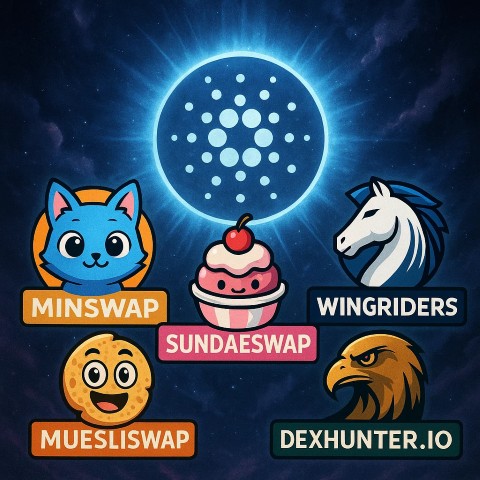
Minswap remains an active multi-pool Cardano DEX. Cardano’s ecosystem directory recorded 94,305 on-chain transactions in the 30-day snapshot ending September 16, 2026.
SundaeSwap also remains active as a Cardano AMM DEX with liquidity provision and an order-book overlay; Cardano’s directory recorded 10,543 on-chain transactions in the same 30-day snapshot.
How Should You Compare DEXs?
- Liquidity for the exact trading pair
- Price impact and slippage
- Protocol and smart-contract design
- Fees
- Routing and order execution
- Wallet compatibility
- Security history and transparency
Trading Volume Is Not the Same as Safety
High activity can indicate usage and liquidity, but it does not eliminate smart-contract, token, liquidity or interface risk. Verify the official application before connecting a wallet and check the asset policy ID before trading unfamiliar tokens.
DEXs vs ADA Staking
Using a DEX is separate from native Cardano delegation. Native ADA staking is non-custodial and does not require depositing ADA into a DEX smart contract. DeFi interactions can introduce additional risks.