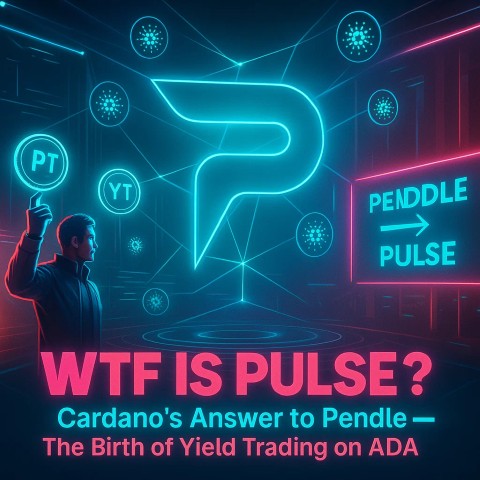
Updated September 2026: Pulse is a Cardano DeFi protocol focused on yield markets. Instead of describing it as “Cardano’s Pendle killer,” the useful comparison is structural: Pulse aims to let users separate and trade exposure to principal and future yield.
What Does Pulse Do?
Yield-trading protocols turn future yield into something that can be priced and traded separately from the underlying principal. This can support fixed-rate strategies, speculation on future rates and more structured DeFi positions.
Why Is This Different from ADA Staking?
Native Cardano staking delegates stake while ADA remains in the user’s wallet. Yield-trading protocols add smart contracts, market pricing and additional token or liquidity mechanics. The risks are therefore different from native delegation.
Current Status
Pulse continues to be presented as a Cardano yield-market project. Product availability, supported markets, rates and integrations can change quickly, so users should verify the live application and documentation before committing funds.
What Are the Risks?
Fixed-rate or yield-token terminology does not mean risk-free. Smart-contract risk, liquidity, counterparty dependencies, depegs and changes in the underlying yield source can all affect outcomes.