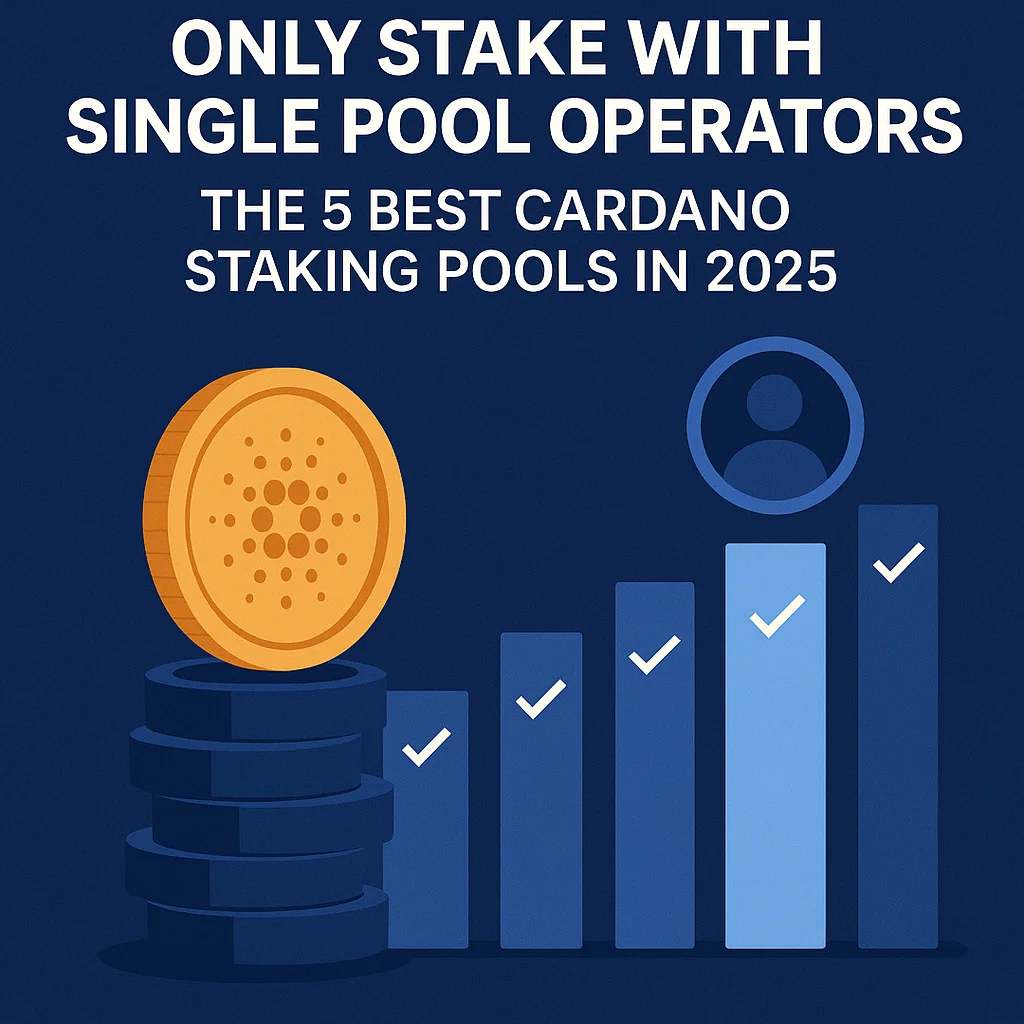
Updated September 2026: This article previously presented a subjective “Top 5” list of Cardano stake pools. That format ages badly and can imply that one pool is objectively best. The useful question is different: which independent stake pools should you compare, and what should you verify before delegating?
There Is No Permanent “Best Cardano Pool”
Stake, saturation, fees and performance change. Block production is probabilistic, so short-term ROA rankings can move dramatically—especially for smaller pools. Any static “best pools” table becomes stale quickly.
Why Independent Single Pools Are Worth Considering
A Single Pool Operator runs one Cardano stake pool rather than operating a group of pools. Choosing an independent pool can help distribute stake and block-production responsibility across more operators. That supports decentralization, but it does not guarantee higher rewards.
What to Compare Instead of a Top-5 Ranking
- Saturation: avoid pools above the current saturation threshold.
- Long-term performance: use more than a single epoch.
- Margin and fixed cost: verify current on-chain parameters.
- Pledge: confirm that the declared owner pledge is met.
- Operator transparency: look for current metadata, infrastructure information and communication.
- Structure: decide whether you want to support an independent single pool or a multi-pool operation.
Where Does ZEIT Fit?
ZEITGEIST (ticker ZEIT) is an independent Cardano Single Pool with roots in the Incentivized Testnet era. We do not claim that ZEIT is objectively the “best” pool. Instead, you can check the current data and compare it using the same criteria you would apply to any other pool.
How to Find Other Independent Pools
Use current Cardano pool explorers and wallet delegation interfaces rather than relying on a frozen list from 2025 or 2026. Compare several unsaturated pools, check their operator structure and inspect their current fees, pledge and performance.
Does a Bigger Pool Always Pay More?
No. More stake increases the probability of block production only up to the protocol’s optimal pool size. Saturation exists specifically to discourage excessive concentration. Small pools, meanwhile, can show more short-term reward variance because they are selected to produce blocks less frequently.
Bottom Line
Don’t delegate because a blog calls a pool “Top 5.” Verify the numbers yourself. A well-run, unsaturated pool with transparent fees and reliable infrastructure is a more useful starting point—and supporting independent operators can be part of your own decentralization preference.
Full 7-point stake pool checklist → · Single Pool Operators explained → · Stake ADA with ZEIT →